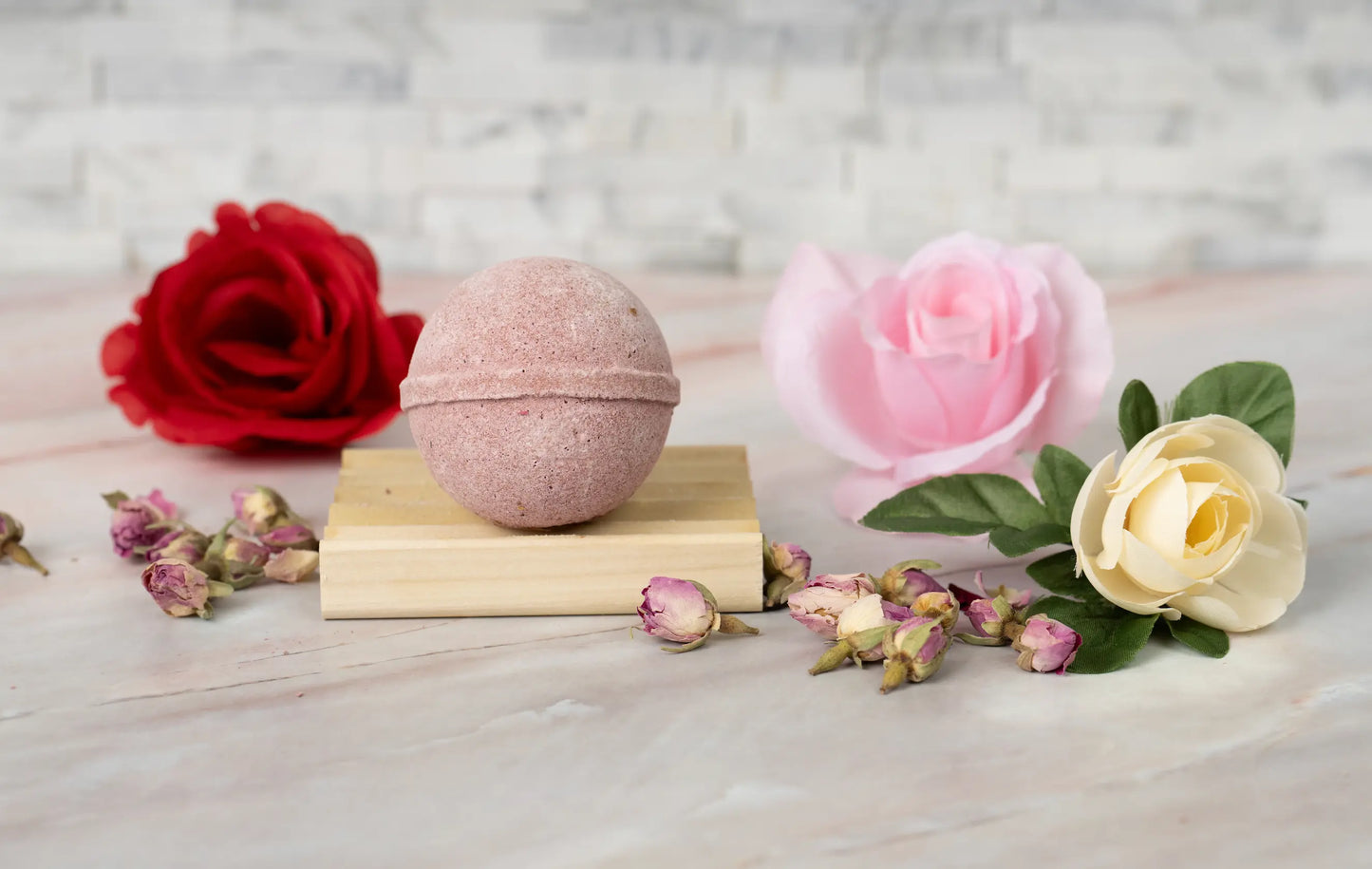
Bed of Roses Bath Bomb
Bed of Roses Bath Bomb
Inhale the sensory beauty of roses - in your tub. Made with food quality baking soda, citric acid, sea salt, sunflower oil, shea butter and natural fragrances.
Couldn't load pickup availability
Description
Description
Bed of Roses Bath Bomb
Transform your bath into a relaxing oasis with the sensory beauty of fresh roses. The Kreiner Natural Soaps Bed of Roses Bath Bomb is mindfully crafted with simple, earth-derived ingredients to effervesce beautifully while deeply nourishing your skin.
Instead of relying on synthetic additives or harsh artificial preservatives, we prioritize clean, plant-based ingredients that remain naturally shelf-stable. Formulated with a rich blend of sunflower oil and shea butter, this bath bomb dissolves smoothly to leave your skin feeling soft, hydrated, and gently scented.
Key Ingredients & Benefits:
-
Pure Shea Butter & Sunflower Oil: Delivers deep, plant-based moisture to the skin while you soak.
-
Natural Sea Salt & Baking Soda: Softens bathwater and provides a soothing, refreshing soak.
-
Natural Fragrance: Infused with clean, botanical rose scents—free from harsh lab-made perfumes.
-
Clean Formula: Free from artificial dyes, parabens, and synthetic preservatives.
Clean & Mindful Ingredients
At Kreiner Natural Soaps, we believe in transparent, minimalist formulas. Our products are mindfully crafted to exclude common irritants, ensuring a gentle wash for all skin types.
- Vegan
- Free From Parabens & Sulfates: We omit harsh cleansing agents, including sodium lauryl sulfate (SLS), to help protect your skin’s natural moisture barrier.
- No Synthetic Dyes: Every hue in our soap is derived naturally from plant extracts or earth clays—never from petroleum or coal tar derivatives.
- Phthalate-Free: Our formulations rely purely on clean, wholesome ingredients.
About Kreiner Natural Soaps
Our soap offers a pure, plant-based alternative to conventional cleansers. Instead of using synthetic perfumes or artificial preservatives, we prioritize earth-derived ingredients that remain naturally shelf-stable. By utilizing traditional cold-process and hot-process soap-making methods, we retain the integrity of our nourishing oils, natural glycerin, and botanicals.
Inspired by generations of family soap-making traditions, our recipes were originally developed to accommodate sensitive skin. We combine moisturizing plant oils with simple, natural ingredients that cleanse thoroughly while leaving skin feeling soft, smooth, and balanced.
How to Use: Drop the bath bomb into a tub of warm water, watch it fizz, and inhale the natural, soothing aroma of roses.
Natural Soap Formulation vs. Synthetic
Natural Soap Formulation vs. Synthetic
Unlike synthetic soaps and washes that rely on detergents like sodium laureth sulfate (SLS) and artificial emulsifiers, pine tar soap maintains a minimalistic, biodegradable formula. The saponification of natural fats with sodium hydroxide yields soap and glycerin, without introducing petrochemicals. This process results in a less abrasive, pH-balanced cleanser that preserves the skin’s acid mantle—a key component in protecting against bacterial and environmental threats.
Curious about how it feels to switch from conventional body wash to pine tar soap? Most users report immediate changes in skin texture and long-term improvements in inflammation and resilience.
Ingredients
Ingredients
Pine Tar vs. Charcoal Soap
Tallow is rich in vitamins A, D, E, and K, and its lipid profile closely mirrors that of human skin sebum. This chemical affinity means it absorbs easily, strengthens the skin barrier, and promotes cell regeneration. When soap contains only whole, minimally processed materials, the function is dual: cleanliness and nourishment.
- Vitamin A: Boosts skin turnover and encourages healing.
- Vitamin E: Acts as an antioxidant, reducing oxidative stress on the skin surface.
- Saponified tallow: Cleans without stripping skin of moisture, thanks to its fatty acid composition—primarily oleic and palmitic acids.
- No artificial preservatives: Low risk of immune reactivity, reducing flare-ups.
Why Skin Responds Better to Fewer Ingredients
The fewer the ingredients, the lower the chance of a reaction. According to a 2022 study published in the Journal of Dermatological Treatment, patients with contact dermatitis reported a 73% improvement in symptoms after switching to simple, additive-free cleansing products. Pure tallow soap aligns perfectly with this minimalist skincare philosophy.
Ask yourself: what if every shower was a step toward skin repair, not just cleansing? When each ingredient serves a function—and only that function—your skin notices the difference.
Science Behind the Soap
Science Behind the Soap
How Pine Tar Interacts with Skin Biology
Pine tar is a byproduct of the carbonization of pine wood, containing a complex mixture of organic compounds including creosols, guaiacol, and phenols. These compounds modulate the skin's inflammatory responses, reduce microbial load, and restore barrier function. When applied topically, pine tar binds to the outermost skin layer, modifying cytokine signaling pathways that mediate skin irritation and immune response. This unique interaction leads to perceptible relief in redness, scaling, and discomfort.
Addressing Common Skin Conditions
Eczema: Calming Disrupted Barriers
Atopic dermatitis (eczema) involves compromised skin barriers and hyperactive immune signaling. Pine tar reduces transepidermal water loss by enhancing the integrity of the epidermal lipid matrix. In a clinical review published in Dermatitis, coal tar showed significant efficacy in managing eczema flare-ups — pine tar, with a lower toxicity profile, demonstrates similar mechanisms with more tolerability.
Psoriasis: Slowing Excess Cell Turnover
Psoriasis is marked by accelerated keratinocyte proliferation. The phenolic compounds in pine tar regulate epidermal cell turnover by suppressing DNA synthesis within hyperactive cell layers. A study in the Journal of Investigative Dermatology documented that tar-based treatments, including pine tar, decreased plaque thickness and scaling in chronic plaque psoriasis by modulating interleukin and TNF-alpha pathways.
Acne: Balancing Sebum and Bacteria
An overproduction of oil and a proliferation of Propionibacterium acnes drive acne development. Pine tar has mild astringent properties and reduces sebum without stripping the skin. Its topical antiseptic qualities limit bacterial colonization. Over time, skin appears less inflamed and pore clogging decreases.
Dry and Itchy Skin: Rehydration at a Deeper Level
By forming a semi-occlusive film on the skin’s surface, pine tar preserves moisture while restoring natural lipid layers. This dual action targets xerosis (abnormally dry skin) at the source. A 2017 evaluation by the Australasian Journal of Dermatology found that pine tar-based products significantly improved skin hydration after just two weeks of consistent use.
Anti-Inflammatory and Soothing Properties
Key to pine tar’s effectiveness is its natural anti-inflammatory activity. The aromatic hydrocarbons interfere with prostaglandin synthesis, limiting vasodilation and swelling. This provides rapid itch relief and reduces visible signs of irritation. Users frequently describe a sensation of “immediate comfort” upon application — not due to numbing, but to active dermal modulation. Over time, pine tar helps recalibrate skin response to stressors, resulting in longer periods of calm, balanced skin.
- Phenols in pine tar act as natural anesthetics, dulling itch signals at the nerve endings.
- Guaiacol exhibits antiseptic and soothing effects akin to menthol, without the cooling sensation.
- High-viscosity resins form an occlusive film that mimics the skin’s lipid barrier.
Each of these mechanisms plays a distinct role, but together they create a skin environment resistant to flare-ups and microbial imbalance. Rather than masking symptoms, pine tar engages with the biochemistry of your skin to shift the condition of the epidermis toward homeostasis.
Share